

 Back
Back


 Back to Catagories


Table of Contents


 + 44 7452
122728
+ 44 7452
122728
 08-Sep-2026
Veronica Davis
Starting a new job often brings a mix of excitement and nervousness. You want to fit in, do well, and understand what is expected, but the first few days can feel confusing without the right support. A positive Employee Onboarding experience helps new hires feel welcomed, confident, and ready to take on their role from the very start.
To understand how organisations create a supportive beginning for new employees, it’s important to first explore what Employee Onboarding includes and why it is essential. This blog offers a clear overview of the onboarding process, its purpose, and the benefits it provides, along with practical insights to help ensure a confident and seamless start.
What is Employee Onboarding?
Employee Onboarding helps new employees settle into their role and the organisation. It begins after offering acceptance and continues until the employee feels confident and productive. It covers more than paperwork by explaining job duties, company values, training, and how the organisation works.
The aim is to help employees feel welcomed and prepared. Providing clear guidance helps employees understand expectations and how their role contributes to organisational goals. This builds early confidence and supports motivation from the very beginning of their journey.

Why is Employee Onboarding Important?
Employee Onboarding is essential because it helps new employees settle in from the start. A clear process helps them feel welcome and understand how the workplace works. It sets clear expectations, builds confidence, improves performance, and reduces early turnover and hiring costs.
Employee Onboarding programme is important because it:
a) Helps new employees adjust faster
b) Improves early work performance
c) Builds confidence and engagement
d) Reduces early employee exits
e) Encourages long-term commitment
The Employee Onboarding Process
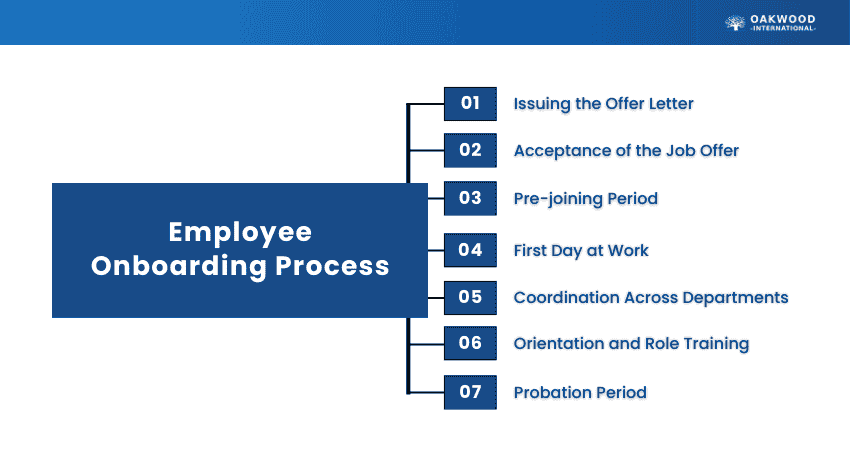
The Employee Onboarding process flow follows a series of steps designed to guide new hires smoothly into the organisation. Each step supports clarity, confidence and early engagement, helping employees settle into their role effectively.
1) Issuing the Offer Letter
The Employee Onboarding process begins with releasing the offer letter. This document confirms the job role, salary, start date, and key terms of employment. It provides clarity and reassurance to the candidate.
A clear and well-written offer letter helps build trust and sets professional expectations. It should be shared promptly to maintain interest and excitement about the role.
2) Acceptance of the Job Offer
Once the offer letter is received, the candidate reviews and accepts it. This confirms their decision to join the organisation and starts the Employee Onboarding process. Clear acceptance brings certainty for both sides.
After acceptance, the organisation should respond quickly and share the next steps. This keeps communication clear and helps the new hire feel supported before their first day.
3) Pre-joining Period
The pre-joining period is the time between offer acceptance and the start date. This stage is often overlooked but plays an important role in Employee Onboarding. During this time, organisations can stay in touch by sharing welcome messages, basic company details, or first-day instructions.
Regular contact during this period reduces stress and keeps new employees engaged. Simple updates help maintain interest and lower the risk of last-minute dropouts.
4) First Day at Work
The joining day is a key part of the Employee Onboarding journey. A warm welcome helps new employees feel at ease. On the first day, they should meet their team, see the workplace, and understand how the day is structured.
Basic needs like system access, seating, and tools should be ready in advance. A well-planned first day helps employees feel comfortable and confident.
Advance your HR expertise by learning how to develop and implement effective people strategies. Join our
HR Strategy Training
now!
5) Coordination Across Departments
Employee Onboarding works best when teams work together. HR, IT, and finance all play an important role in supporting new employees. Their tasks may include setting up email access, providing equipment, granting access to required systems and software, and arranging payroll details.
Good coordination avoids delays and confusion. It allows new employees to focus on learning their role instead of dealing with basic setup issues.
6) Orientation and Role Training
Training and orientation are key parts of the Employee Onboarding process. They help employees understand their role, responsibilities, and how the organisation works. This ensures they gain the right knowledge and skills to do their job with confidence.
Orientation usually covers company values, basic policies, and workplace culture. Training may focus on the role or general tasks. Clear and simple training helps new hires learn faster and settle in smoothly.
7) Probation Period
The probation period is part of the Employee Onboarding journey. It allows both the employee and the organisation to review performance and role fit. During this time, managers should offer guidance, support, and regular feedback.
This period helps employees improve and fix issues early. It also builds trust between employees and managers and supports long-term success. Clear feedback during this time helps employees stay focused and confident in their role.
What are the Benefits of Strong Employee Onboarding?
In a competitive job market, hiring is costly, and poor onboarding can lead to early exits. A strong Employee Onboarding process supports new hires and protects this investment. Key benefits are outlined below:
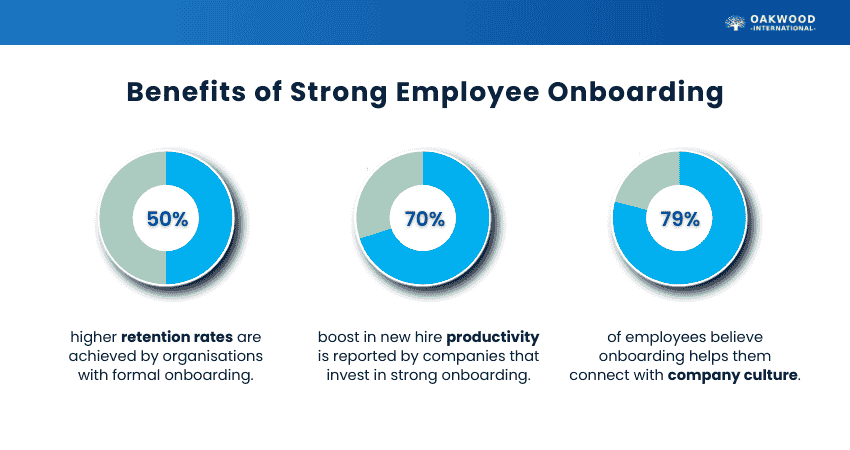
1) Lower Employee Turnover: A strong onboarding process helps employees feel supported and confident from the beginning, which reduces the likelihood of early departures.
2) Improved Employee Engagement: When employees understand their role, goals, and workplace culture, they feel more motivated and involved in their work.
3) Quicker Job Readiness: Clear training and guidance help new hires learn faster and become productive in less time.
4) Reduced Hiring and Training Costs: Better onboarding improves retention, reducing the need for repeated recruitment and additional training expenses.
5) Stronger Candidate-to-Employee Experience: A smooth transition from recruitment to employment builds trust and reinforces a positive impression of the organisation.
6) Faster Cultural Integration: Introducing company values and ways of working early helps employees fit in and build relationships quickly.
7) Clear Role and Performance Clarity: Clearly defined responsibilities and expectations help employees focus on the right tasks and deliver consistent results.
8) Improved Customer Experience: Well-prepared employees are more confident and effective, leading to better service and happier customers.
9) Higher Hiring Manager Satisfaction: Managers benefit when new employees are prepared, independent, and able to contribute effectively at an earlier stage.
10) Early Identification of Skill Gaps: Onboarding helps spot training needs early, allowing timely support and Skill Development.
Develop the skills to enhance performance and drive meaningful growth in your organisation. Join our
Human Capability Development Program Course
now!
Challenges in Employee Onboarding
Employee Onboarding can be challenging when processes are unclear or support is limited. These issues can affect Employee Engagement, confidence, and retention. The key challenges are here:
1) Lack of a Clear Process: Unstructured Employee Onboarding leads to confusion and delays in essential tasks like paperwork and system access.
2) Information Overload: Too much information at once can overwhelm new hires and reduce retention.
3) Unclear Expectations: Without clear goals, employees may struggle to understand their role and performance standards.
4) Poor Communication: Weak coordination and limited team interaction can leave new hires feeling disconnected.
5) Inadequate Training and Tools: Outdated training and delayed access to systems slow down productivity.
6) Remote Onboarding Challenges: Remote employees often face communication gaps and limited social connections during Employee Onboarding.
Advance HR Analytics skills that drive better talent and business outcomes with our
HR Analytics Course
– Join now!
Best Practices for Effective Employee Onboarding
Effective Employee Onboarding helps new employees feel welcomed, prepared, and engaged from the start. Following these best practices ensures a smooth and positive onboarding experience:
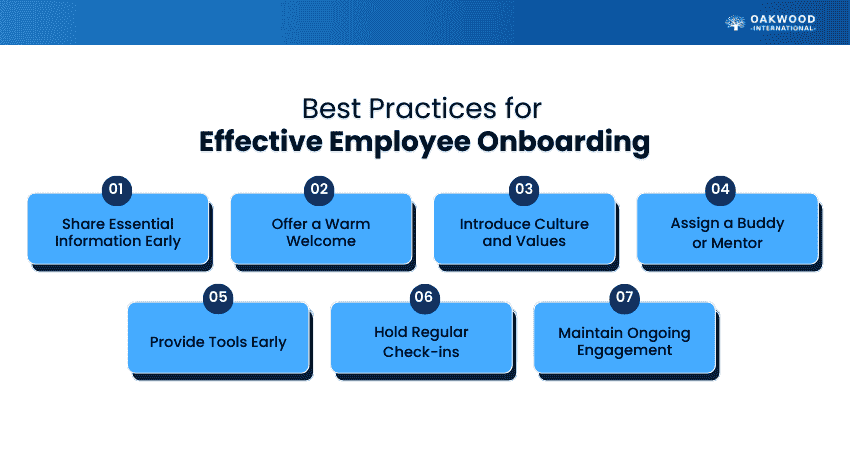
1) Share Essential Information Early: Send a welcome email with key details such as start time, dress code, parking and first contact.
2) Offer a Warm Welcome: A personalised message or small welcome gift helps build an early connection.
3) Introduce Culture and Values: Use orientation sessions during Employee Onboarding to explain the company’s mission, values, and ways of working.
4) Assign a Buddy or Mentor: Pair new hires with a colleague to guide them through daily tasks and policies.
5) Provide Tools Early: Ensure timely access to systems, passwords, and resources so new employees can begin work without delays.
6) Hold Regular Check-ins: Schedule ongoing one-on-one meetings to support progress and address questions or concerns early.
7) Maintain Ongoing Engagement:
Encourage interaction, learning, and mentorship from offer acceptance through the early stages of employment.
Conclusion
Employee Onboarding is more than a starting process; it shapes how employees feel, perform, and grow within an organisation. When onboarding is planned well, it builds confidence, clarity, and connection from day one. By following the right steps and best practices, organisations can create a positive first experience that turns new hires into motivated, committed and high-performing team members.
Build skills to lead teams with confidence and impact. Join our HR Leadership Courses today!
Frequently Ask Questions
What are the 5 C's of Onboarding?
The 5 C’s of Onboarding are Compliance, Clarification, Culture, Connection and Confidence. Together, they help employees understand rules, job roles, workplace values, relationships, and expectations, making the Employee Onboarding experience complete and effective.
What is Employee Onboarding Automation?
Employee Onboarding automation uses digital tools to manage tasks such as document submission, system access, training schedules, and communication. It reduces manual work, saves time, and helps deliver a consistent onboarding experience for all new employees.
What is Onboarding in HR?
Onboarding in Human Resources (HR) refers to the process managed by the HR team to help new employees join the organisation smoothly. It includes documentation, orientation, training coordination, and ongoing support to ensure successful integration into the workplace.
Related Blogs
Didn’t Find What You’re Looking For?

Our commitment to excellence ensures an exceptional learning experience tailored to your professional development needs.


© Copyright 2026 - Oakwood International ™ - All rights reserved.


SUPER SALE
 Get Amazing Discounts
And Deals
Get Amazing Discounts
And Deals